

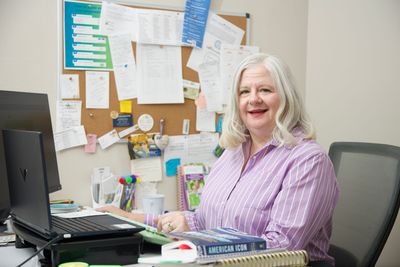

 Information & Referral
Respite care and dementia care options, with free local referrals
No sleep, constant chaos, and you need respite care so you can rest? Mom moved in with you and now you're not sure she can stay home much longer? Respite care, in-home help, adult day care, assisted living, nursing homes: the choices can feel endless. The Alzheimer's & Dementia Resource Center (ADRC) helps you understand respite care and your other dementia care options, and connects you with trusted local providers, for free.
If you have a question about caregiving, we can help
At the Alzheimer's & Dementia Resource Center (ADRC), we answer caregiving questions every day. Wondering where to turn for a complete diagnostic assessment? Need direction on who to hire for in-home help? Trying to figure out the difference between assisted living and skilled nursing? Call us.
The Alzheimer's & Dementia Resource Center (ADRC) is a nonprofit that gives free information and referrals to dementia caregivers in Orange and Seminole counties and across Central Florida. Whether you need in-home help or are starting to look at assisted living or memory care communities, we can point you to options.
Call us at (407) 436-7750 any weekday between 8:30 AM and 4:30 PM. We can help over the phone, or we'll email or mail you information.
You can also make an appointment for in-person help at our office at 1470 Gene Street, Winter Park, FL 32789.
Information & Referral is free, like all of our caregiver services.
What are the care options for someone with dementia?
The main dementia care options are in-home care, adult day care, assisted living or memory care, and skilled nursing. The right choice depends on the person's needs, your health, your budget and the help you have.
In-home care
Help comes to the house. Non-medical in-home care covers things like companionship, bathing and meals. Medical in-home care is provided by nurses or therapists.
Adult day care
The person spends the day at a supervised center with activities and meals, then comes home at night. It gives caregivers a regular break.
Assisted living and memory care
A residence with help for daily activities. Memory care is a secure setting or unit built for people living with dementia.
Skilled nursing
A nursing home with round-the-clock nursing care, for people with serious medical needs.
Respite care
Short-term care, at home or in a facility, so the caregiver can rest.
Hospice care
Comfort-focused care for a person near the end of life, at home or in a care setting, with support for the family. When treatment is no longer helping, hospice can help your loved one stay comfortable.
Legal and financial planning
Elder law attorneys help with planning, benefits and decisions about the future.
What is respite care for dementia?
Respite care is short-term care for a person living with dementia, so the caregiver can take a break. The same idea applies to respite care for elderly adults in general.
Respite care examples include:
- Respite care at home: an in-home aide or companion stays with your person for a few hours
- A day at an adult day care center
- A short stay in an assisted living or memory care community
- A friend, neighbor or volunteer who sits with your person while you rest
Taking a break isn't selfish. If you're running on no sleep, rest helps you keep caring for the person you love. A caregiver support group is another way to get a few hours for yourself and talk with people who understand.
Call us at (407) 436-7750 and we'll share respite care options near you, including in-home services and adult day care. A free Care Navigation session can help you build regular breaks into your care plan.
Where can I find respite care or adult day care for dementia near me?
Call us at (407) 436-7750. We keep referral lists for respite care, adult day care, assisted living, nursing home facilities and other services in Central Florida, with a focus on Orange and Seminole counties.
We'll ask about your situation and share options that fit. If you live outside Central Florida, find your state's helpline on our Elder Services Helplines page.
Does Medicare cover in-home care for seniors with dementia?
Unfortunately, not a lot. For seniors with dementia, Medicare generally doesn't pay for long-term help with daily activities like bathing, dressing and supervision when that's the only care needed.
Medicare's GUIDE program provides a limited amount of respite hours through participating providers. Medicare's hospice benefit can also cover short respite stays for people in hospice. Some Medicare Advantage plans say they offer in-home help, so ask your plan which companies they work with.
Medicare also doesn't pay for room and board in assisted living. Medicaid may help some people who qualify.
Check your coverage at medicare.gov. For a plain-language guide to paying for care, see the Alzheimer's Association. Veterans may have other options; see our Veterans Resources.
What is the difference between assisted living and skilled nursing?
Assisted living helps with daily activities in a home-like setting. Skilled nursing provides 24-hour medical care from licensed nurses.
Assisted living suits someone who needs help with things like meals, bathing and medicines but is medically stable. Some assisted living communities have memory care units for people living with dementia.
Skilled nursing suits someone with serious health needs that require nursing care around the clock.
We can refer you to facilities with dementia units. Call (407) 436-7750.
When should someone with dementia go into a care home?
There's no single right time. It's usually time to consider a move, or more help at home, when the person is no longer safe at home, or when their care is more than you can safely give.
Signs include wandering, falls, missed meals or weight loss, missed medicines, care needs at night, or your own health starting to suffer. If you're exhausted, snapping more than you'd like, or can't remember your last full night of sleep, that counts too.
Making this decision doesn't mean you've given up. A free Care Navigation session can help you weigh the options and plan the next step. The National Institute on Aging also has helpful guidance.
Information on topics such as
Looking for gentle ways to connect at home? See Remember My Song for how music can reach a person living with dementia.
Communicating with a person living with dementia
Dealing with delusions and hallucinations
Enrolling in research studies
Government financial assistance: where to begin
Home safety
Managing activities of daily living
Stages of dementia
Transportation options
Types of dementia
Wandering
And many more
Referrals to medical and non-medical professionals
Searching for in-home care, assisted living or nursing home facilities near you? Our referral lists come from caregivers who have used these providers or attended an ADRC program. Providers cannot buy a spot on our lists.
Please help us keep these lists reliable by sharing your experiences with us.
Assessment centers
Geriatric physicians
In-home services: medical
In-home services: non-medical
Legal aid services and elder law specialists
Neurologists
Neuropsychologists
Psychiatrists
Adult day care
Facilities with dementia units
More questions about dementia care options
Where do I go for a dementia diagnosis?
Start with the person's primary care physician to rule out other conditions that can look like dementia. At the same time, you can visit a local research company for a free memory screening. We can refer you to assessment centers, neurologists and neuropsychologists. Our Alzheimer's and dementia FAQ explains common signs and terms.
How do I qualify for respite care?
It depends on who pays. Anyone can pay privately for respite care at home, adult day care or a short facility stay. Help paying may come from Medicare's GUIDE program (a limited number of respite hours), the hospice benefit for people in hospice, Medicaid for people who qualify, or veterans' benefits. Call us at (407) 436-7750 and we'll help you work out which options fit your situation. See also our Veterans Resources.
How do I choose a memory care facility?
Visit more than once, at different times of day. Ask how staff are trained in dementia care, what happens if your person wanders (some communities ask residents to leave over wandering), what activities and outings residents enjoy, and exactly what the monthly bill includes, since extra care fees can add up fast. Call us for referrals to facilities with dementia units that other caregivers have used.
What if a care provider isn't working out?
Write down what's going wrong and talk with the provider or facility manager first. If things don't improve, you can change providers. Call us at (407) 436-7750 for other options, and please tell us about your experience; caregiver feedback is how we keep our referral lists reliable.
Will Medicare pay for assisted living for dementia?
Generally, no. Medicare doesn't cover room and board in assisted living. Medicaid may help some people who qualify. Check medicare.gov and call us to talk through options.
Can someone with moderate dementia live alone?
It depends on the person, but living alone becomes riskier as dementia progresses. Watch for missed meals or medicines, unpaid bills, getting lost, or safety problems at home. If you're worried, call us at (407) 436-7750 to talk it through.
How do I choose an in-home care company?
Ask friends and other caregivers, and call us for referrals. Our lists are built from caregiver experiences, and providers can't pay to be on them.
How do I know when they need more care than I can give?
Watch for safety problems and for your own limits. Falls, wandering, missed medicines, help needed through the night, or your own health slipping are all signs it's time for more help, at home or in a care setting. Call us at (407) 436-7750 to talk through what's next.
We can't afford much. What are our options?
Start by learning what each option costs and what you may qualify for. Medicare covers little long-term care, but Medicaid may help some people who qualify, and veterans may have other benefits. In a free Care Navigation session, we look at what you can afford and which local services fit. See also our Veterans Resources.
Is there a cost for Information & Referral?
No. Thanks to our donors, this service is free to caregivers and care partners.
I live out of state. Can you help with my parent in Central Florida?
Yes. Long-distance caregiving is hard, and we help out-of-state caregivers whose loved ones live in our area. We can help over the phone and email or mail you information. Call (407) 436-7750.
I don't live in Central Florida. Can you help?
We're based in the Greater Orlando area and focused on Florida's caregiver community. For local help where you live, find your state's agency on our Elder Services Helplines page.
Alzheimer's & Dementia Resource Center (ADRC)
Alzheimer's & Dementia Resource Center (ADRC)
1470 Gene Street, Winter Park, FL 32789
Serving Orange and Seminole counties and Central Florida since 1984
(407) 436-7750
info@adrccares.org
Monday to Friday, 8:30 AM to 4:30 PM
ADRC is an independent nonprofit for dementia caregivers. We are not one of Florida's state Aging and Disability Resource Centers. To reach those, see our Elder Services Helplines page.
Talk with someone who knows the options
Call (407) 436-7750, Monday to Friday, 8:30 AM to 4:30 PM, or email info@adrccares.org. We'll help you find the right care.